A short entry on 死
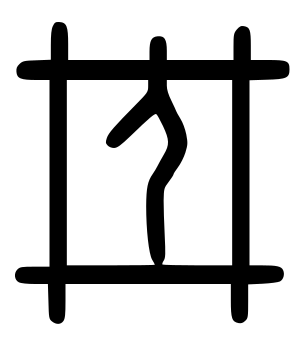
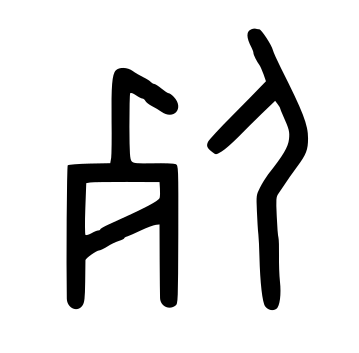
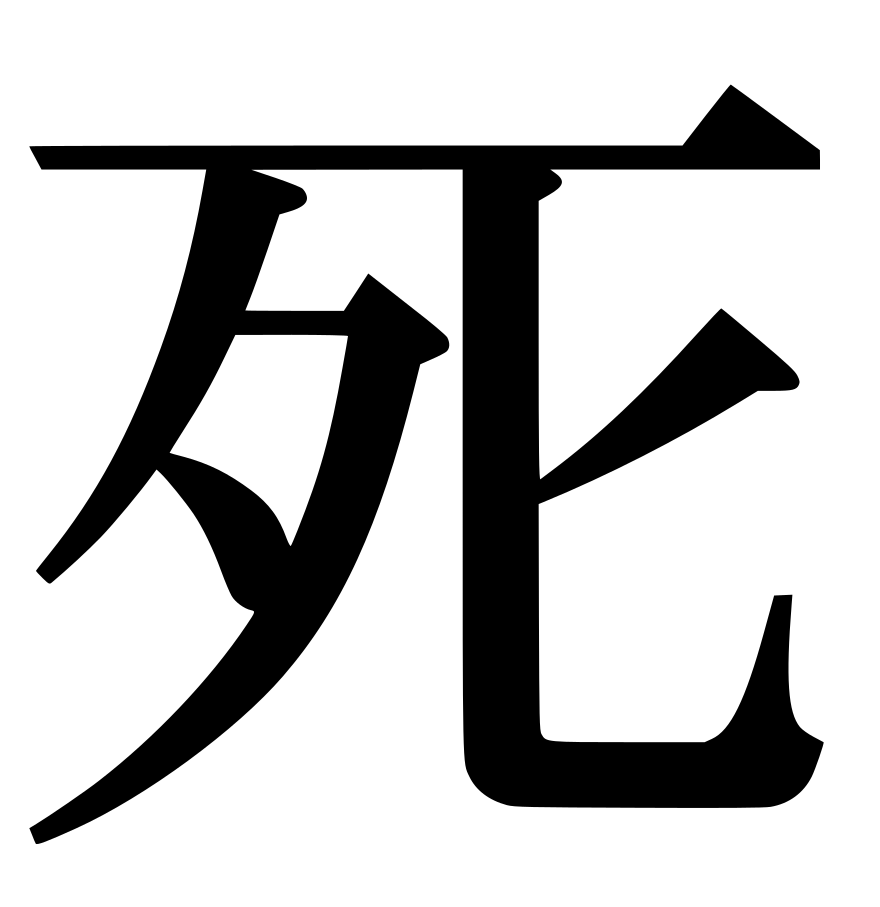
In the period of Oracle bone inscriptions (OBI) the Chinese word for ‘dying’ was written with a combination of 井 (a well, here meaning hole in the ground, grave) and a person centered in it. A different version turned up as a combination of bones 歹 and person 人. This one evolved into the modern character, except that in regular script (standing) person was replaced by fallen person 匕.²
Ochiai and Outlier take 死 as a semantic compound, which can be analyzed in any number of ways (a person who mourns the deceased, or the process whereby a person turns into a skeleton, etc.).³
Katō suggests a phonetic role for the element on the right, that seems to be based on identifying 人 or 匕 with 司. However, comparing the OBI shapes, that hypothesis seems highly unlikely (compare OBI for 死 with OBI for 司).⁴
Notes
References
- Katō 漢字の起源 (The origin of Chinese characters), 加藤常賢 Katō Jōken. 角川書店 Kadokawa shoten. Tōkyō, 1970.
- Ochiai (2011) 甲骨文字小字典 (Small character dictionary of Oracle bone characters) 落合淳思 Ochiai Atsushi. 筑摩書房 Chikuma Shobō. Tōkyō, 2011.
- Outlier Outlier Dictionary of Chinese Characters: Expert Edition <www.outlier-linguistics.com>
- Xiaoxuetang Database <https://xiaoxue.iis.sinica.edu.tw/>
Modified: Friday 14 June 2019