A short entry on 脆
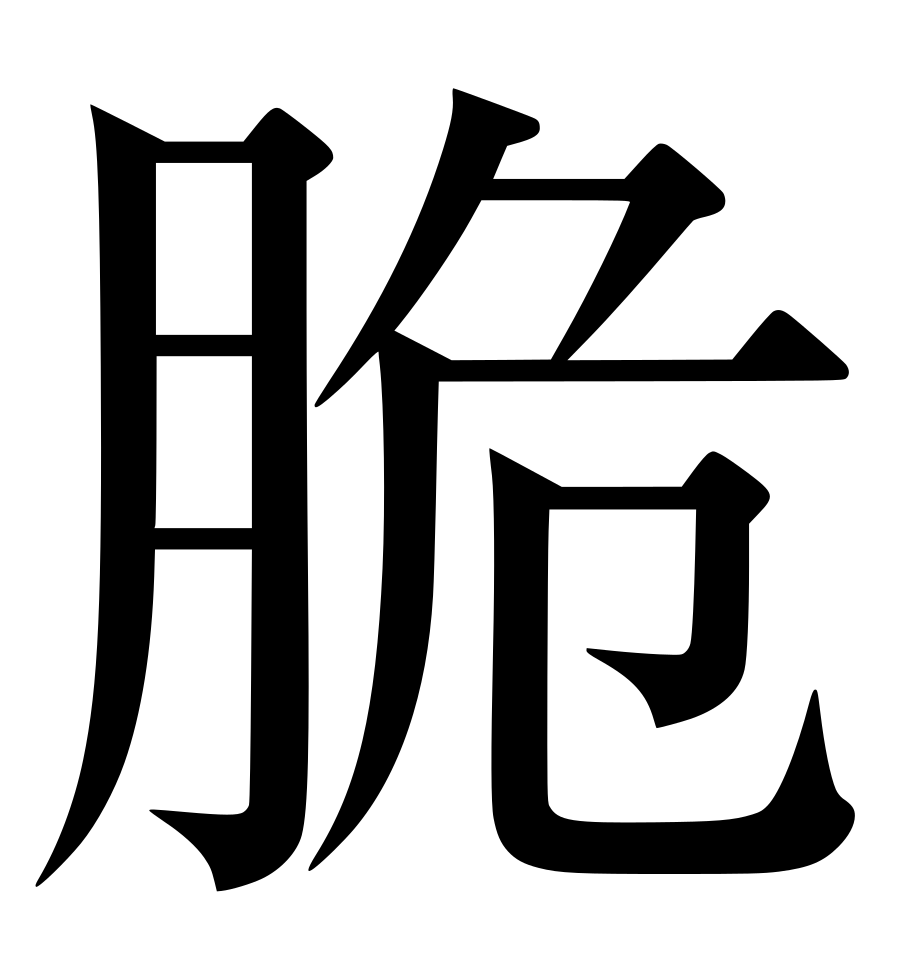
脆い moroi brittle; tender-hearted
涙脆い namidamoroi easily moved to tears
脆弱な zeijaku na weak; frail
脆 used to be written as 脃. According to one scholar the right part is an abbreviation of 絕/絶,¹ lending its meanings cut and sever.² Why 脃 uses meat/flesh 肉/⺼ as signific is unclear. Perhaps that the scribes saw an association with meat being soft/crisp/tender, or considered the human body fragile. Suggest taking 危 as person on a cliff, in danger of falling off and breaking their body (肉/⺼).
Mnemonic: If you fall of a dangerous cliff you break easily and become dead meat
The layout of the box above follows the style of an entry in Henshall’s 1988 book.³
1. Xǔ Shèn writes: 小耎易斷也。从肉,从絕省。.
2. Xǔ Shèn doesn’t say it’s a phonogram. Baxter (cited in EDOC):
tshwjejH versus dzwjet? Modern jué /tɕɥe˧˥/ versus cuì /tsʰwei̯˥˩/? Japanse ZEI versus ZETSU? You tell me.
3. Henshall’s book doesn’t have an entry on 脆.
References
- EDOC Digital Etymological Dictionary of Old Chinese, <https://edoc.uchicago.edu/edoc2013/digitaledoc_index.php>
- Henshall A guide to remembering Japanese characters, Kenneth G. Henshall. Tōkyō. Charles E. Tuttle Company. Rutland, Vermont & Tokyo 1990 [1988].
- Xǔ Shèn 說文解字, 許慎 Xǔ Shèn . [CE 121].
16 September 2013

CC BY-SA 4.0