Analysis and history of 喪

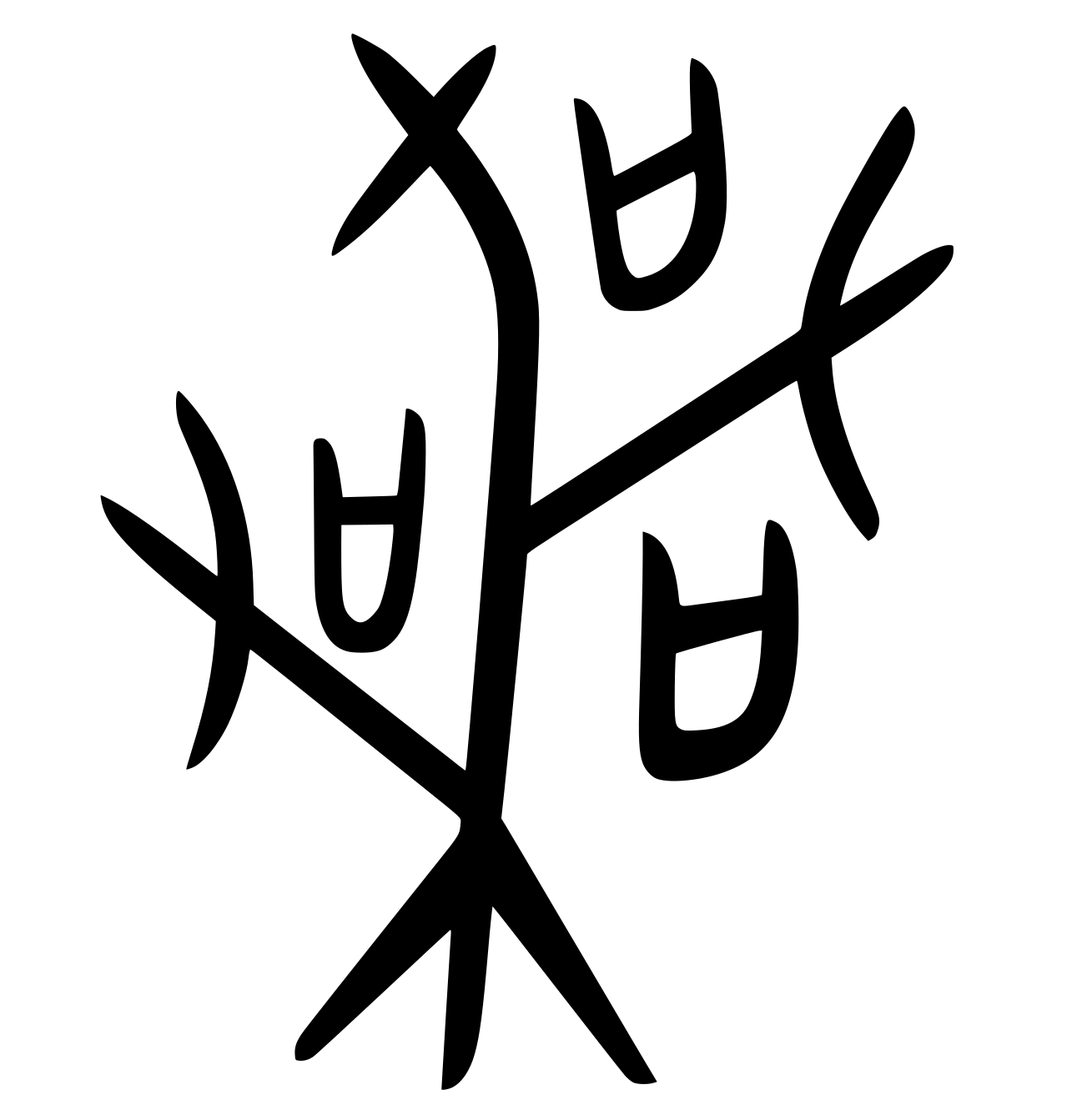 and show mulberry tree
 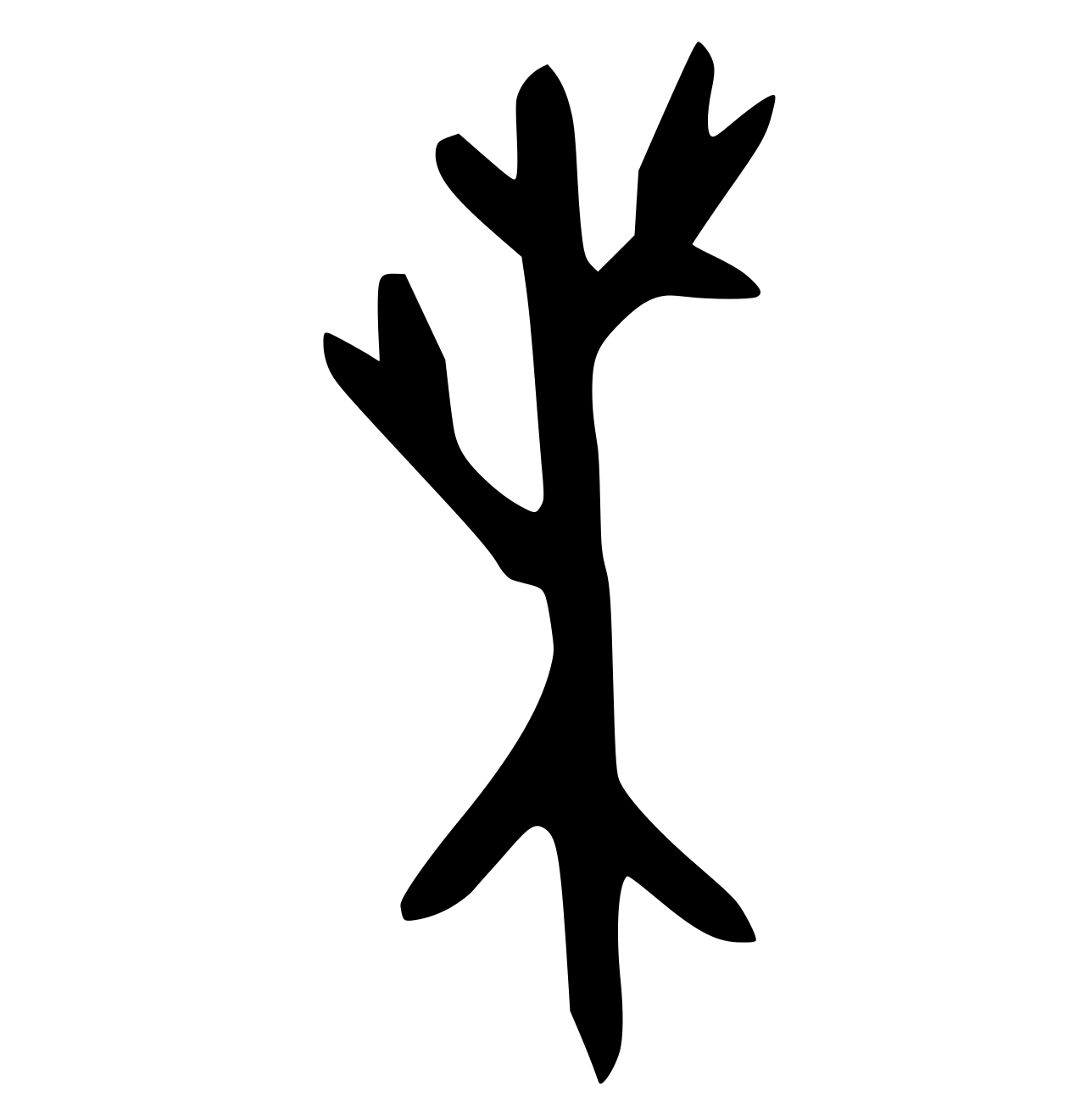 (modern 桑) acting as phonetic,¹ with two, three or even four times
  added.² The latter is not mouth
 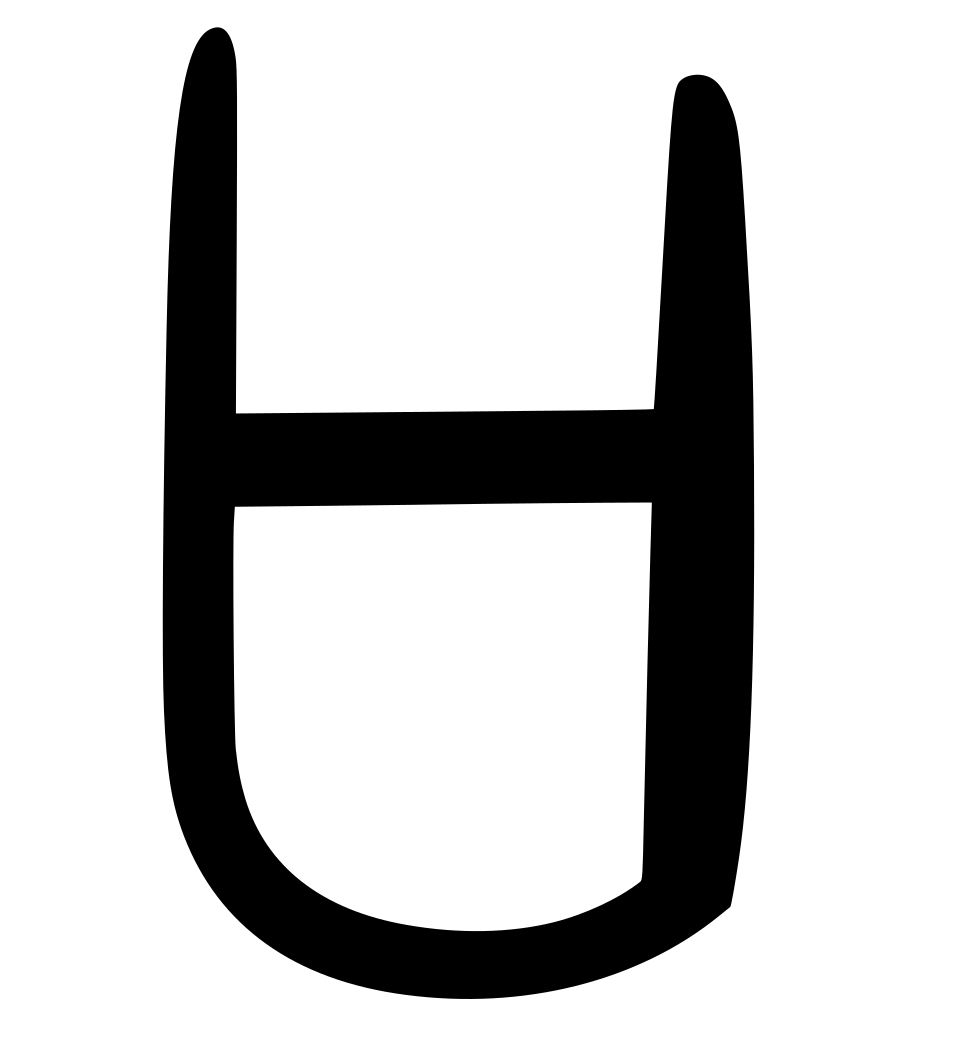 /口 but a receptacle that here symbolizes ritual. This allowed 喪 to point to a word for a kind of ritual, perhaps ritual concerning deceased. Some scholars speculate that the second meaning of lose and loss may have been derived from that (its use in that sense was most often related to war, specifically referring to soldiers fallen on the battlefield). As time went by the scribes made the lines in 喪 quite geometrical, with first four boxes placed symmetrically (as in
 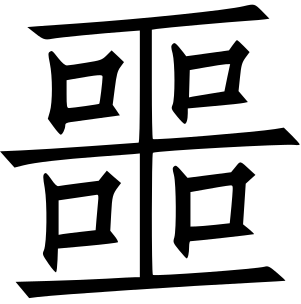 ) and later two. Additionally, they added escape/lose/die
 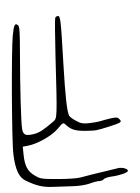 /亡³ at the bottom to reinforce the intended meaning of 喪.⁴ However, in the development of clerical script was fused to the top part and was rendered in slanted strokes as in clothes 衣.⁵
Mnemonic: mourn the loss of two boxes of strange clothes⁶
Extended explanation and references
Before 喪 was conclusively identified among oracle bone inscriptions (OBI), researchers had to do with bronze engravings that were not very clear. In addition to that, Xǔ Shèn 許慎 had written that according to him 喪 consisted of 哭 with /亡 added as phonetic with also semantic value (亦声). Some scholars followed Xǔ Shèn, others proposed different interpretations. In the end it seems that having much clearer OBI available makes all those interpretations obsolete.
Mizukami identified one or more OBI for 喪 in 1995, while Gu included a few in his 2008 book, identifying its main element as “mulberry tree.”¹ Below a bunch of impressions of OBI by Ochiai.²


Seeley et al. write: “Gu notes that in ancient times there was an association between the mulberry tree and the grieving process when someone died.” That seems to indicate that Gu analyzed the OBI for 喪 as a combination of semantic elements only. Ochiai suggests that 桑 “mulberry tree” acts as phonetic, which seems persuasive given that according to Schuessler (p. 450) the reconstructed readings for 喪 and 桑 are identical (as are the modern Mandarin readings).
However, Schuessler continues to write:
This word [sāng 喪] is prob[ably] not related to sàng 喪 ‘lose, destroy’ (under → wáng₁ 亡 ‘lose’), although these two words share the same graph due to similar sound and mental semantic association.(ibid.)
As it happens, exactly 亡 was added to 喪 in bronze inscriptions for clarification. 喪 has kept its two different readings and its two different meanings into modern times. I take this to mean that early on 喪 was used as a loan graph for ‘lose, destroy’ and that the two words kept sharing the same graph until today even.
With 桑 “mulberry tree” as phonetic, the symbol fulfills the role of signific. Note that already in Oracle bone script could either refer to matters of the mouth, the mouth cavity, and speech, or stand for a receptacle, or a symbol for ritual. The latter is the case here.³
Transformation of the shape
The modern form of 喪 can no longer be sensibly analyzed without knowing its development. Already at the time of Xǔ Shèn 許慎 (who lived around the first century CE) it was no longer known what the lines in the top of 喪 originally represented. In the seal character shape the added symbol of /亡 was still recognizable, but became distorted with the development of the lìshū 隷書 (Japanese: reisho) style of writing. As a result of the necessary simplification (rendering the shapes using a limited range of brush strokes) and confused standardization (instead of standardizing to 亡, as in the top of 忘, the scribes chose to make look like the bottom of 衣) 喪 became an unintelligible sign.
Perhaps that some learned readers assumed (wrongly) that the graph 哭 (“weep... lament... bemoan the deceased”⁴) was a meaningful element of 喪 (as suggested by Xǔ Shèn). That could have made some sense to them. However, for most people 喪 ended up as a sign, certainly with no obvious relation to 桑, its mostly likely original phonetic. For the lay person mouth 口 should be a clearly recognizable element—but in this context not very useful as a semantic hint (and originally it pointed to receptacle of some sort). Also, a common variant of 喪 was 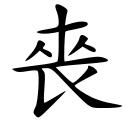 ⁵ (where 人 replaces 口) and currently the PRC has simplified 喪 further as 丧.
References
- CDOSP Concise dictionary of spoken Chinese 國語字典, Yang Ren Chao 楊聯陞 and Lien Sheng Yang 趙元任. Cambridge: Harvard University Press, London: Oxford University Press, 1947.
- Kroll A student’s dictionary of Classical and Medieval Chinese, Paul W. Kroll. Brill. Leiden, 2015.
- Ochiai (2014) 漢字の成り立ち (The development of kanji) 落合淳思 Ochiai Atsushi. 筑摩書房 Chikuma Shobō. Tōkyō, 2014.
- Ochiai (2016) 甲骨文字辞典 (Dictionary of Oracle bone characters) 落合淳思 Ochiai Atsushi. 朋友書店 Hōyū Shoten. Kyōto, 2016.
- Qiú (2000) Chinese Writing 文字學概要, Qiu Xigui 裘錫圭 (Translated by Gilbert L. Mattos and Jerry Norman). The society for the study of early China & The institute of east asian studies, university of California, Berkeley. Birdtrack Press. New Haven, 2000.
- Seeley et al. The complete guide to Japanese Kanji: Remembering and understanding the 2,136 standard characters, Christopher Seeley and Kenneth G. Henshall with Jiageng Fan. Tuttle. (printed in Singapore), 2016.
- Schuessler (2007) ABC Etymological dictionary of old Chinese, Axel Schuessler. University of Hawai'i Press. Honolulu, 2007.

CC BY-SA 4.0